
Millions of people drink water from a reverse osmosis system every day. Most never see what happens inside the unit. This guide walks through the full water purification process, one step at a time. You will learn what each part does, why it matters, and what purified water benefits you can expect once the water reaches your glass.
What Is Reverse Osmosis?
Reverse osmosis, often called RO, is a way to clean water. It pushes water through a semipermeable membrane. This membrane acts like a very fine screen. Water molecules pass through it. Dirt, salt, metals, and germs cannot.
Think of the membrane as a tiny sieve. Its pores are so small that only water molecules can fit through most of the time. This is called molecular filtration. The membrane has selective permeability. That means it lets some things through and blocks others.
The Science Behind It: Osmotic Pressure Explained
To understand reverse osmosis, you need to know plain osmosis first. Here is a simple osmosis definition: water moves through a membrane from a spot with less dissolved stuff to a spot with more. Scientists call this movement toward a higher solute concentration. It happens through diffusion, which is just natural solvent movement.
Reverse osmosis flips this natural flow. A pump adds hydraulic pressure to the dirty water side. This pressure is stronger than the natural pull, called osmotic pressure. The added force pushes clean water through the membrane the "wrong" way. That is why the process is called reverse osmosis.
How Reverse Osmosis Systems Work: Step by Step
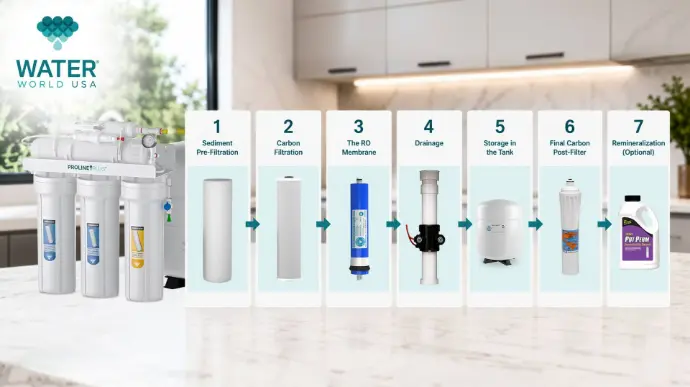
Now let's break down the filtration stages one by one. Most RO systems use a multi-stage filtration design. Water enters as feed water and leaves as clean permeate water.
Step 1: Sediment Pre-Filtration
The water first enters a sediment pre-filter. This is the first pre-filtration stage. It is usually made from a polypropylene sediment filter. This step traps large bits like dirt, sand, sediment, and rust. It protects the more delicate parts of the system that come next.
Step 2: Carbon Filtration
Next, water flows through a carbon block filter, also called an activated carbon filter. This is often a granular activated carbon (GAC) design. This stage handles chlorine removal. It also soaks up volatile organic compounds (VOCs) and bad tastes or smells. Chlorine can damage the RO membrane, so this carbon pre-filter step protects it.
Step 3: The RO Membrane
This is the heart of the system. Here, a high-pressure pump forces water through the RO membrane cartridge. This membrane sits inside a membrane housing. Most home systems use a spiral wound membrane made from thin-film composite membrane material, often labeled TFC. Some designs instead use a cellulose acetate membrane or polyamide membrane, built from aromatic polyamide or cellulose triacetate.
RO systems use cross filtration, not dead-end filtration. In dead-end filtration, dirt piles up inside the filter. In cross filtration, water flows across the membrane instead. This helps wash away buildup and keeps the surface clean.
At this stage, the system splits water into two paths. Clean water becomes permeate water. Dirty water becomes the concentrate stream, also called brine/reject water. This stage handles ion rejection, blocking dissolved solids, heavy metals, nitrates, arsenic, and germs, while also driving fluoride removal, lead removal, and removal of bacteria and viruses. The contaminant rejection rate for most RO systems is 95 to 99 percent.
Step 4: Drainage
Water with a high level of total dissolved solids (TDS) cannot stay in the system. A flow restrictor, sometimes built as a flow restrictor valve, controls how much water goes down the drain line. This keeps the right balance of pressure inside the unit. The dirty water leaves through a drain saddle connected to your home plumbing.
Step 5: Storage in the Tank
RO membranes make clean water slowly. So the system needs a storage tank, also called a pressurized tank, to hold water until you need it. A check valve and shut-off valve help control water flow in and out of the tank. Some systems use a permeate pump to move water into storage more efficiently.
Step 6: Final Carbon Post-Filter
Before water reaches your RO faucet, it passes through one more filter. This post-filter removes any leftover taste or smell picked up while sitting in the tank. This final polish step improves the taste of reverse osmosis water, which is why RO water often tastes so clean.
Step 7: Remineralization (Optional)
Some systems add a remineralization filter as a last step. This turns a normal unit into an alkaline RO system. It adds back small amounts of minerals for taste and balance. This step is optional and not found on every system.
What Do Reverse Osmosis Systems Remove From Water?
RO systems are built to handle many types of drinking water treatment needs. Here is what they typically remove:
- Chlorine and chloramine
- Lead and other heavy metals
- Fluoride
- Arsenic
- Nitrate and nitrates
- Pesticides
- Hard water minerals
- Organic matter
- Colloids and pyrogens
- Germs like E. coli, cryptosporidium, and giardia
- PFAS, a group of man-made chemicals found in some water supplies
Because of this wide range, RO is one of the most trusted forms of water filtration technology for both homes and businesses.
Types of Reverse Osmosis Systems
Not all RO systems look the same. Here are the main types:
- Under-sink RO system: fits below your kitchen sink, a common form of point-of-use filtration
- Whole-house RO system: treats all water entering your home
- Tankless RO system: skips the storage tank and makes water on demand
- Commercial RO systems: used in restaurants, offices, and stores
- Industrial reverse osmosis: used in factories and large plants, and often paired with seawater desalination for coastal regions
Each type serves different needs, from small-scale residential water filtration to large water treatment system setups.
3-Stage vs. 4-Stage vs. 5-Stage Systems
Basic RO units use three filters: sediment, carbon, and the membrane. More advanced systems add extra stages, like a second carbon post-filter or a remineralization filter. More stages usually mean better taste and more steps of protection, but they also mean more filters to replace over time.
Factors That Affect RO System Performance
A few things change how well an RO system works:
- Water pressure requirements: low incoming pressure can slow the system down
- Water temperature: colder water flows through the membrane more slowly
- TDS meter readings: source water with high mineral content in water and high water hardness takes longer to clean
- The age and quality of the filters and membrane
Testing your water with a TDS meter before and after filtering helps confirm the system's RO efficiency.
How Long Do RO Membranes Last?
Membrane replacement is a normal part of owning an RO system. Most membranes last two to three years before they need to be swapped out. Watch for signs of membrane fouling or membrane scaling, such as slower flow or odd taste. Following a regular filter change schedule keeps the system working well. Many units also run a system flush cycle to clean the membrane between uses.
Check the system's recovery rate and water waste ratio too. These numbers show how much clean water the system makes compared to how much goes down the drain. A system's output is often measured in gallons per day (GPD).
Reverse Osmosis vs. Other Filtration Methods
RO is not the only way to treat water. Here is how it compares:
- Water softener: uses ion exchange to remove hardness minerals like calcium, but does not remove most other contaminants. This is the classic water softening vs RO comparison.
- Distillation: boils water and collects the steam, removing minerals but using more energy
- Ultrafiltration: uses a looser membrane, good for particles but not dissolved salts
- Nanofiltration: sits between ultrafiltration and reverse osmosis in pore size
- Dialysis: a medical process that also relies on membrane separation, though used for the body rather than tap water
Reverse osmosis stands out because it produces deionized water with very low total dissolved solids (TDS), which most other methods cannot match.
Standards and Water Quality Testing
Great stories are for everyone even when only written for just one person. If you try to write with a wide, general audience in mind, your story will sound fake and lack emotion. No one will be interested. Write for one person. If it’s genuine for the one, it’s genuine for the rest.
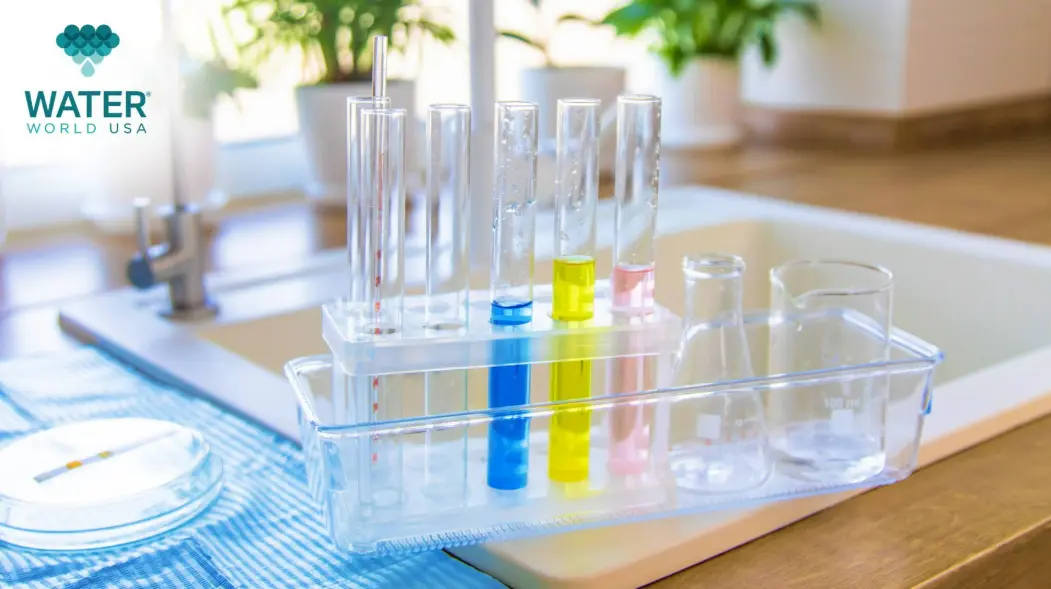
Groups like the EPA, NSF International, the WQA, the FDA, the CDC, and the WHO set rules and guides for potable water. Look for NSF certification when buying a system. This shows it meets tested EPA water standards for removing specific contaminants. Regular water quality testing helps confirm your municipal water supply or well water treatment setup is working as it should.
Installation Basics
Setting up an RO system involves a few basic steps. The installation process usually includes connecting to your plumbing, adding a water inlet valve, and fitting an air-gap faucet or standard RO faucet on your counter. Many under-sink kits include an auto shut-off (ASO) valve that stops water flow once the tank is full. Larger setups may need a booster pump to raise low hydraulic pressure. A pressure gauge helps you monitor the system once it is running.
Frequently Asked Questions
Does reverse osmosis remove all minerals from water?
Yes, RO removes most minerals along with other contaminants. This is why some systems add a remineralization filter afterward.
Is reverse osmosis water safe to drink?
Yes. RO is a well-tested form of drinking water treatment and meets standards set by groups like the EPA and WHO.
How much water does an RO system waste?
This depends on the water waste ratio and recovery rate of your unit. Older systems waste more water than newer, high-efficiency designs.
Can I install an RO system myself?
Many under-sink kits are made for do-it-yourself installation. Whole-house or commercial RO systems usually need a professional due to their more complex plumbing connection needs.
Does RO water need remineralization?
Not always. It is a personal choice. Some people prefer the taste of water from an alkaline RO system with added minerals.