
Your water may look clear. That does not always mean it is clean. Many homes have water that carries chlorine, minerals, or metals you cannot see.
The five most common signs are:
- Your water smells or tastes odd
- White chalky spots show up on faucets and glasses
- Your skin feels dry, and your laundry feels stiff
- You see stains, cloudy water, or weak water flow
- Your appliances break down too soon
A whole-house water filtration system is also called a point-of-entry (POE) water filter. It sits on your main water line, right where water enters your home. Every tap, shower, and machine gets treated water. A point-of-use filter, like a pitcher or an under-sink filter, only cleans one spot. That is the big difference in the whole-house filter vs. under-sink filter debate.
These signs are not just small annoyances. They point to real problems with your residential water treatment system.
Sign #1: Your Water Smells or Tastes Off
Water should taste clean and plain. If it does not, your home water filtration system may be missing.
Chlorine Smell in Tap Water
Cities add chlorine and chloramine to kill germs. The Safe Drinking Water Act requires this, and the Environmental Protection Agency enforces it. The American Water Works Association and the World Health Organization both back this practice for safety.
But the leftover taste stays. Many people say their tap water smells like a swimming pool. That chlorine smell can ruin coffee, soup, and ice. This is one of the clearest bad water tastes in coffee and ice cubes.
Chlorine also mixes with plant matter and makes disinfection byproducts in tap water. These include trihalomethanes (THMs). The EPA sets limits on these under its rules.
Rotten Egg Smell in Water
A rotten egg smell in water means hydrogen sulfide. This is common with well water. It is one of the top signs you need a well water filtration system.
Metallic or Musty Taste
Metallic-tasting water often points to iron (Fe), manganese (Mn), or old pipes. Musty or earthy-tasting water can mean organic matter in the supply. Water that tastes flat or chemical is also a red flag.
The Bottled Water Clue
Do you buy bottled water because you do not trust your tap? That habit of relying on bottled water at home is a sign by itself.
What fixes it: An activated carbon filter cuts chlorine, taste, and odor. Catalytic carbon media works better on chloramine.
Sign #2: White Chalky Buildup on Faucets and Glass
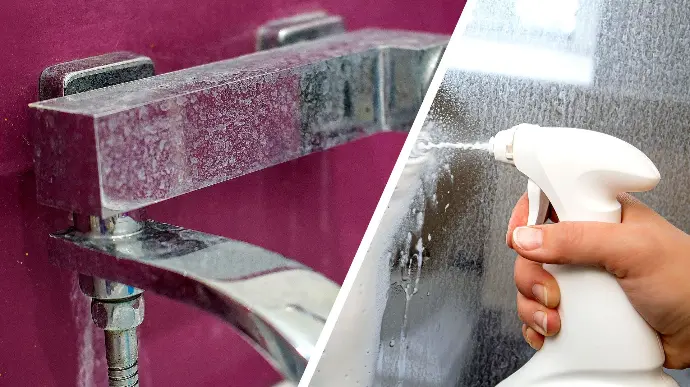
Hard water is the cause here.
What Limescale Is
Calcium and magnesium minerals dissolve into water as it moves through rock. When water dries or heats up, those minerals stay behind as calcium carbonate (CaCO₃). That is scale.
You will spot white chalky residue on faucets first. Then limescale builds up on showerhead parts. You may also see spotty dishes after the dishwasher and a cloudy film on glassware.
Other clues: soap won't lather, and soap scum builds up fast in the shower.
How Hard Is Your Water?
Water is called hard above 120 mg/L, or 7 grains per gallon (GPG). That is the standard used by the Water Quality Association and backed by U.S. Geological Survey (USGS) data. About 85% of homes in the country have moderately hard water or worse.
Level | GPG | PPM | What You See |
Soft | 0 to 1 | 0 to 17 | No spots |
Moderate | 3.5 to 7 | 60 to 120 | Light film |
Hard | 7 to 10 | 120 to 180 | Clear scale |
Very Hard | 10+ | 180+ | Heavy crust |
You can look up water hardness by zip code online for a rough idea.
Water Softener vs Water Filter
This matters a lot. A filter removes chemicals. A softener removes hardness. In the water softener vs water filter choice, many homes need both.
A softener uses ion exchange resin. A salt-free water conditioner uses Template Assisted Crystallization (TAC) instead. Neither one takes out chlorine.
Sign #3: Dry Skin, Dull Hair, and Stiff Laundry
Your body and your clothes feel the water too.
Skin and Hair
Chlorine strips away natural oils. That leads to dry, itchy skin after showering. You may also notice brittle, dull hair from hard water. Minerals coat each strand and leave it rough.
Laundry Problems
Hard water keeps soap from rinsing out. The result is stiff, scratchy laundry and dingy white clothes. You may use more detergent and still get poor results.
This sign is key. A pitcher filter does nothing for your shower or your washer. Only whole-home water filter setups treat every line in the house.
Sign #4: Stains, Cloudy Water, and Weak Pressure
Look at your sinks and tubs.
Stains
Rust stains in the toilet bowl and sink mean iron. Rusty brown or yellow water in the bathtub points to the same issue. Blue-green staining on fixtures means corroded pipes and fixtures, often copper.
Cloudy or Dirty Water
Cloudy tap water and discolored water from faucet taps can come from sediment, silt, and rust particles. A short spell of brown water after a city hydrant flush is normal. Water that stays off for days is not.
Weak Flow
Low water pressure from clogged aerator screens is common. Clogged faucet and showerhead screens fill with grit. If you clean them often, your water may still carry too much sediment.
What fixes it: A sediment pre-filter with a 5 to 10 micron rating catches most grit.
Sign #5: Your Appliances Break Down Too Soon

This sign costs the most money.
Water Heater Damage
Sediment settles at the bottom of the water heater. Scale coats the heating element like a blanket. That means higher energy bills from scale and premature water heater failure.
Other Machines
Scale buildup inside pipes narrows the flow. Your dishwasher and washer face the same wear. The result is a shorter appliance lifespan and more frequent plumbing repairs. Field reports show filtration can add several years to appliance lifespan and protect against water damage.
The Invisible Signs
Some threats leave no taste, smell, or stain. These include:
- Lead (Pb) in drinking water from old pipes, covered by the EPA Lead and Copper Rule
- PFOA / PFOS (PFAS), known as PFAS forever chemicals
- Arsenic and other heavy metals in water
- Nitrate in well water
- E. coli / total coliform bacteria
- Cryptosporidium and Giardia cysts
- Volatile organic compounds (VOCs)
- Microplastics in tap water
- Fluoride in municipal water and pharmaceutical residues in tap water
The Centers for Disease Control and Prevention (CDC) warns that these need lab testing to find. This is why you should test even if you see none of the five signs.
How to Confirm It: Test Before You Buy
Read Your Water Report
City customers get an annual water quality report, also called a Consumer Confidence Report (CCR). It lists what the municipal water treatment report found. Compare it to the National Primary Drinking Water Regulations and the Maximum Contaminant Level (MCL) for each item. The EPA sets limits for more than 90 contaminants.
Home Tests
A home water test kit gives quick answers. Water hardness test strips show parts per million (ppm) and GPG. A total dissolved solids (TDS) meter gives a rough total. These help, but they don't detect lead or bacteria.
Lab Tests
A certified lab water analysis is the only sure path. This is the only way to prove lead, PFAS, nitrate, or bacteria levels.
Well Owners
Nobody tests your well but you. The CDC advises testing well water at least once a year.
Match the Sign to the Right System
Your Problem | Likely Cause | Filter Media | Standard |
Chlorine taste, odor | Chlorine, chloramine | Granular activated carbon (GAC) | NSF/ANSI 42 |
Lead, cysts, VOCs | Old pipes, runoff | Carbon block | NSF/ANSI 53 |
PFAS | Industrial waste | Special carbon | NSF/ANSI 401 |
Heavy metals, iron | Well or old pipes | KDF-55 / KDF-85 | NSF/ANSI 372 |
Bacteria, viruses | Well water | Ultraviolet (UV) disinfection | NSF/ANSI 55 |
Hardness, scale | Calcium, magnesium | Softener or TAC | Varies |
Grit, rust | Sediment | Sediment pre-filter | NSF 42 |
Drinking water | All of the above | Reverse osmosis (RO) | NSF 58 |
Many homes use a multi-stage filtration system that blends these. Larger units use a backwashing tank system.
Sizing and Flow
Match the flow rate GPM to your home. Use 10 GPM for 1 to 2 baths, and 15 to 20 GPM for 3 or more. A clean system causes only a small pressure drop (PSI). Check the filter capacity in gallons too. Many run 100,000 to 1,000,000 gallons.
Certification
NSF International works with the American National Standards Institute (ANSI) to test these claims. Look for an NSF-certified water filter mark.
What It Costs
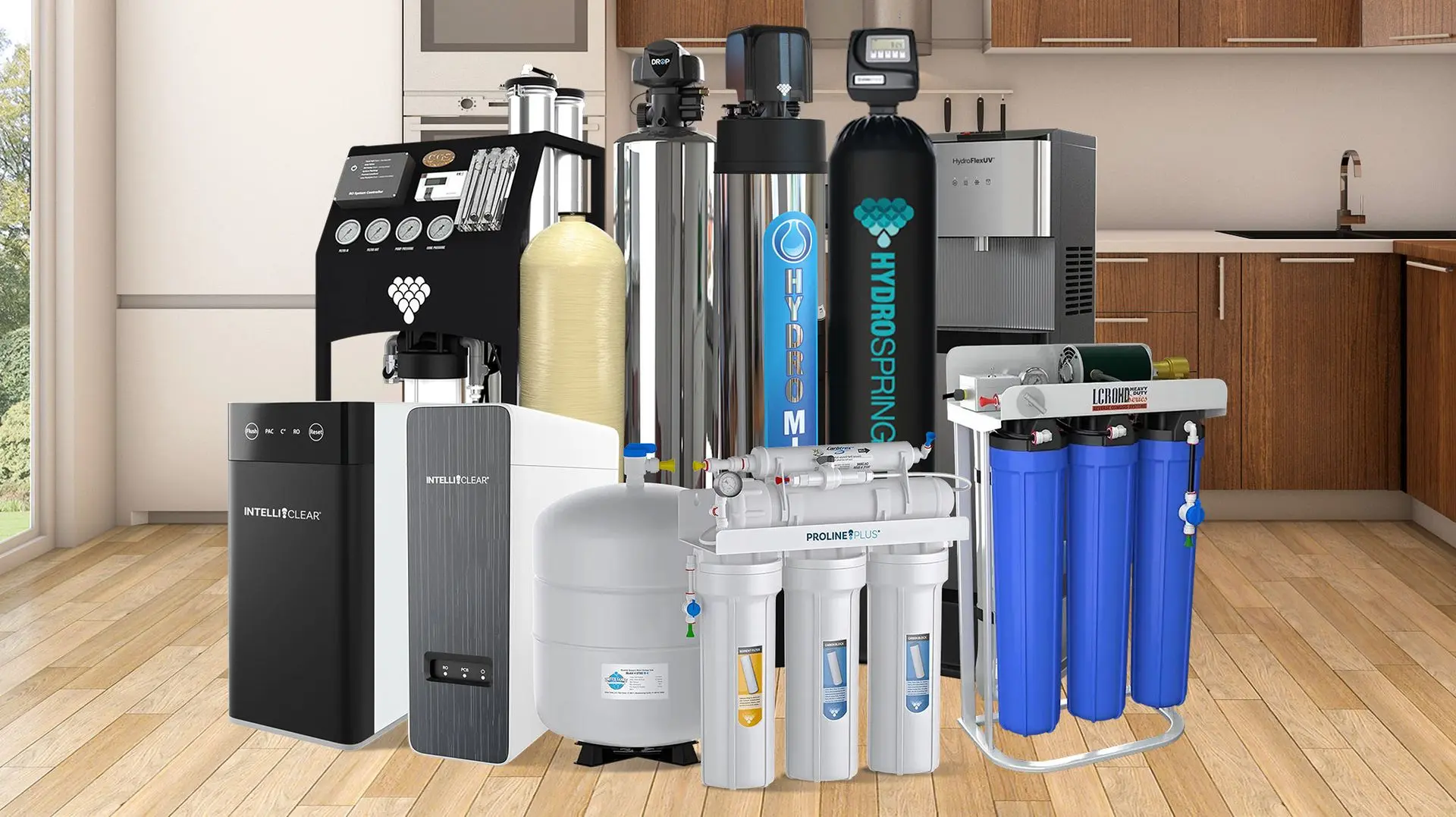
Here is the whole-house water filter cost picture for most homes:
- Equipment: $500 to $3,000
- Professional plumber installation: $300 to $2,000, based on how hard the plumbing job is
- Total installed: $1,500 to $5,500 for most homes
- Annual upkeep: $100 to $500
A DIY whole-house filter install saves labor costs, but only if you know plumbing well. Most systems need a bypass valve so you can shut off water for service.
City Water vs Well Water
A water filter for city water runs $1,500 to $4,000. It usually means sediment plus carbon. Well builds cost more because they add an iron filter, air injection, UV, and extra stages.
Upkeep
Follow a clear filter cartridge replacement schedule:
- Sediment: every 3 to 6 months
- Carbon: every 6 to 12 months
- KDF media: 5 to 7 years
- UV bulbs: once a year
Simple filter housing maintenance keeps leaks away. Check the system lifespan and warranty before you buy, since housings often last 10 years or more. Annual filter replacement costs little compared with repair bills.
What You Save
Think about bottled water cost vs filtration. Add in less detergent, longer-lasting machines, and lower power bills. Some buyers also see water filtration and home value gains when they sell.