
Every day, people throw away millions of single-use plastic bottles. Most are never recycled. They pile up in dumps or wash into rivers and seas. There is a simple fix. A home water filter can reduce a lot of this waste. Home water filtration cleans your own tap water. Then you do not need to buy disposable water bottles. This cuts plastic bottle waste at the start. This guide shows how filters work. It shows what they take out. And it shows how to reduce plastic waste the easy way.
The Scale of the Plastic Bottle Problem
The numbers are huge. Americans use more than 50 billion plastic water bottles each year. Only about 1 in 4 is recycled. Low plastic recycling rates mean most bottles end up in landfill. The U.S. Environmental Protection Agency (EPA) says the recycling rate for plastic bottles is under 30 percent.
Bottled water is hard on the planet, too. It takes about three times as much water to make a bottle as the bottle holds. The plastic lifecycle adds more pollution. Plastic production emissions are high. And greenhouse gas emissions from plastic add to climate change. The carbon footprint of bottled water is far bigger than that of tap water. That is true once you count trucks, ships, and trash.
A plastic bottle can take about 500 years to break down. That long plastic decomposition time means bottles do not just go away. Much of it becomes plastic waste in waterways. They turn into marine plastic debris. They feed on ocean plastic pollution. Some end up in the Great Pacific Garbage Patch. The Organization for Economic Co-operation and Development estimates that the world produces about 353 million tons of plastic waste each year. Only about 9 percent of it is recycled.
This is why so many people ask, " Is bottled water bad for the environment? The environmental impact of bottled water is real. The National Oceanic and Atmospheric Administration (NOAA) warns that plastic harms sea life. Tiny plastic bits move up the food chain, increasing plastic contamination. They go from small fish to large ones. Groups like the World Economic Forum and the Ellen MacArthur Foundation call this a global plastic pollution crisis.
How a Water Filter Reduces Plastic Waste
The idea is easy. A filter cleans your tap water. So you no longer need water sold in plastic. That is the heart of the "filtered not bottled" idea. You get filtered water on tap. You refill a reusable water bottle again and again.
This is real plastic waste reduction, not just recycling. It stops waste before it starts. Water purification at home gives you clean drinking water at home any time. It is a smart alternative to tap water. It helps you reduce your plastic footprint.
The savings in bottles are big. Brita says two of its filters can keep up to 1,800 bottles out of the trash in one year. Aquasana says one under-sink filter can replace about 3,700 small bottles in six months. That is the power of plastic bottles saved by filtering water.
Types of Water Filtration Systems
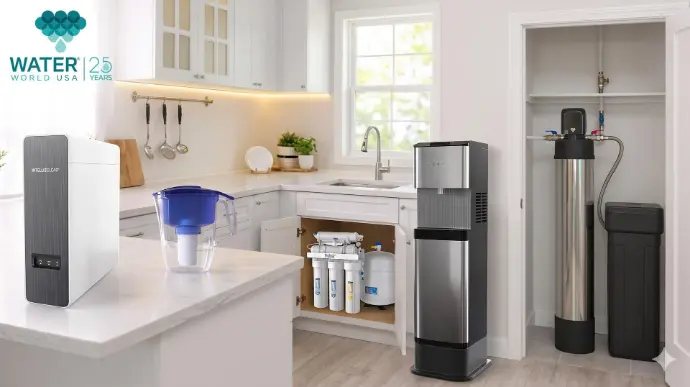
There are many filter types. Each one helps cut waste in its own way. Most homes use a point-of-use filtration unit, which cleans water at one tap.
- A water filter pitcher is cheap and easy. You fill it and keep it in the fridge.
- A faucet-mounted filter clips onto your tap for quick filtered water.
- An under-sink filtration system stays out of sight and lasts a long time.
- A countertop water filter sits on your counter and is simple to set up.
- A whole-house filtration system cleans water at every tap in the home.
- A bottleless water dispenser is great for offices and big families.
Filters also use different methods to clean water.
- An activated carbon filter traps bad taste and smell. A carbon block filter and granular activated carbon (GAC) work the same way.
- A reverse osmosis system pushes water through a semipermeable membrane to remove tiny bits. This is also called an RO system.
- An ultrafiltration membrane, a nanofiltration membrane, and a microfiltration membrane use very small holes to block particles.
- A ceramic water filter uses tiny pores in clay. A gravity-fed water filter needs no power at all.
- Water distillation boils water and catches the clean steam.
- Ion exchange resin swaps out hard minerals and some metals.
Many good systems use multi-stage filtration, which means more than one step. A filter's micron rating tells you how small a particle it can catch. Sub-micron filtration catches the smallest bits. Look for a long-lasting water filter so you don't need to replace the filter cartridge as often. A refillable filter can also cut waste.
Well-known brands include Berkey, iSpring, AquaTru, Culligan, and LifeStraw. If you like fizzy water, a SodaStream maker lets you add bubbles at home with no bottles.
What Water Filters Remove
A good filter does more than cut plastic. It also makes water safer and improves drinking water quality. Filters can handle many common tap water contaminants.
- Chlorine removal for better taste and smell
- Lead removal, which the EPA Lead and Copper Rule also supports through home filters
- Heavy metals filtration for metals like copper and arsenic
- Sediment removal for sand and rust
- Fluoride reduction with RO systems
- Emerging contaminants like pharmaceutical contaminants
- PFAS / forever chemicals, which are hard to break down
- Bisphenol A (BPA), a chemical found in some plastics
These steps mean your water is cleaner than it was. The European Drinking Water Directive even added plastic to its watch list.
Do Water Filters Remove Microplastics?
This is one of the top questions people ask. So, do water filters remove microplastics? The answer is yes. But only the right ones do.
First, the problem. Microplastics in drinking water are very common. A study from Columbia University and Rutgers University in 2024 found about 240,000 plastic bits in one liter of bottled water. About 90 percent were nanoplastics. Those are even smaller. This work was printed in the Proceedings of the National Academy of Sciences (PNAS). Wei Min, a scientist at Columbia, helped build the laser tool that counted them. Phoebe Stapleton, a scientist at Rutgers, helped study the health side.
Older work backs this up. A 2018 study in Frontiers in Chemistry found 325 plastic particles per liter in bottled water. It was led by researcher Sherri Mason. The journal Nature has also shared maps of plastic in the sea. Much of this plastic is PET plastic fragments. PET is short for polyethylene terephthalate. It is the plastic used in most water bottles. Tests of tap water vs bottled water microplastics can favor tap water. That is because bottled water often has more.
Now the fix. A reverse osmosis vs carbon filter test makes the answer clear. A plain activated carbon filter is not made to block plastic bits. But a reverse osmosis membrane has very tiny pores. They are near 0.0001 micrometers wide. Microplastics are at least 1 micrometer wide. So the membrane cannot let them through. That makes RO the best water filter for microplastics. It is a true water filter that removes plastic particles.
You want to be sure a filter works. So look for an NSF-certified water filter. NSF International is also called the National Sanitation Foundation. It tests filters for safety. It works with ANSI, the American National Standards Institute, to set the rules. Other groups, like IAPMO, test filters too.
Here are the main standards to know:
- NSF/ANSI 401 covers emerging contaminants, which can include microplastics
- NSF/ANSI 58 covers reverse osmosis systems
- NSF/ANSI 53 covers health contaminants like lead
- NSF/ANSI 42 covers taste and smell
- NSF/ANSI P231 covers microbes
- NSF 244 covers fine filtration
Health Benefits and Microplastics in the Body
Why does this matter for you? Scientists are still learning. But plastic bits do show up inside us. The National Institutes of Health (NIH) has studied this. It says that microplastics in the human body have been found in the blood, lungs, and gut. Microplastics in blood worry many doctors. The World Health Organization (WHO) says we need more studies on the health risks of microplastics.
Not everyone agrees on the risk. The International Bottled Water Association and the American Chemistry Council say there is no firm proof of harm yet. Still, many families want access to safe drinking water. So they choose to lower their plastic intake. A filter gives better-tasting filtered water. It also brings clear household filtration benefits, like fewer bottles and cleaner water.
Environmental Benefits Beyond Plastic
A filter helps the planet in more ways than one. It aids environmental conservation by cutting trash. It can mean energy savings from filtration. That is because no trucks ship heavy bottles to stores. Less plastic also means less chemical leaching from plastic into soil and water.
An eco-friendly water filter is a clear eco-friendly water solution for daily life. Many green groups push for less plastic. These include the World Wildlife Fund (WWF), Greenpeace, and the World Resources Institute (WRI). The list also includes the International Union for Conservation of Nature (IUCN), the Surfrider Foundation, and the Marine Conservation Society.
Cost Savings: Filtered vs. Bottled Water
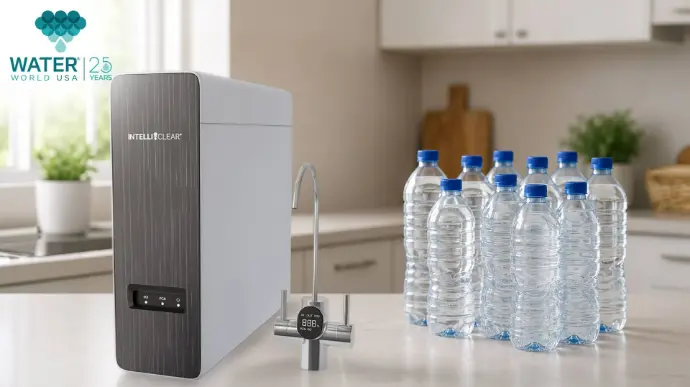
Money is a big reason to switch. The bottled water vs filtered water math is clear. Tap water costs about $0.004 per gallon. Top bottled brands can cost more than $10 per gallon. Over the course of a year, a family can spend hundreds or even thousands on bottled water.
A filter is a one-time buy plus cheap refills. So the cost savings vs bottled water add up fast. Here is one more fact. About 64 percent of U.S. bottled water comes from city taps anyway (NRDC). So you may pay a lot for filtered tap water in a plastic bottle.
The Bigger Picture: Global Action on Plastic
Your choice is part of a bigger shift. The world is moving toward a circular economy. That means things are reused, not tossed. The United Nations Environment Program (UNEP) leads work on plastic. The UN Environment Assembly (UNEA) voted to start a Global Plastics Treaty. A group called the Intergovernmental Negotiating Committee on Plastic Pollution (INC) leads these talks.
Other rules help too. The Basel Convention sets limits on the movement of plastic waste between countries. In Europe, the EU Packaging and Packaging Waste Regulation pushes reuse. Coalitions also fight for change. These include the Plastic Pollution Coalition, Break Free From Plastic, and the Global Plastic Action Partnership. Together, they support the growing bottle-refill movement.
How to Choose the Right Filter
Picking a filter is simple if you follow a few steps.
- Match the filter to your home. A pitcher fits a small home. An RO or whole-house unit is a good fit for a big one.
- Check the certification. Trust a tested filter over a fancy label.
- Plan for filters. Know the cost and life of each cartridge.
- Pair it with a good bottle. Use a stainless steel water bottle, a glass water bottle, or a BPA-free bottle.
This is the easy path to sustainable hydration every day.
Simple Steps to Cut Plastic Waste Today
Want to know how to reduce plastic waste at home? Start small.
- Track how many bottles your family uses in one week.
- Pick a filter that fits your needs, even a basic water filter pitcher.
- Carry a reusable bottle and skip the store.
- Refill at a water refill station when you are out.
- Recycle any bottles you still have.
These habits build a zero-waste lifestyle and support plastic-free living. They also bring the old rule to life: reduce, reuse, recycle.
Frequently Asked Questions
Do water filters remove microplastics?
Yes, but mostly reverse osmosis systems and very fine membrane filters. Plain carbon filters are less reliable.
How many plastic bottles does a water filter save per year?
It depends on use, but one home filter can replace thousands of bottles in a year.
Is filtered water cheaper than bottled water?
Yes. Tap water costs a fraction of a cent per gallon, while bottled water costs far more.
Is filtered tap water safe to drink?
For most homes, yes. A good filter removes many common contaminants and improves taste.
What is the best water filter for plastic waste?
The best one fits your home and is tested by a trusted group like NSF International.
Conclusion
Cutting plastic does not have to be hard. A simple home filter gives you clean water, saves you money, and prevents bottles from forming before they start. You skip the waste, the cost, and many of the worries about plastic. Choose a filter that fits your life, grab a reusable bottle, and join the move toward less plastic. Your wallet and the planet will both thank you.